Before a coat goes into the wash it sits on a low table. Its pocket is inside out and a loose button has appeared beside the lining. The coat has a tag near its cuff. The button needs to spend part of the turn somewhere else. The invented laundry uses shallow trays so a pocket find can wait near its own return record without being left in the clothes.
This was the first playable choice in The Button in the Pocket. The player can set the button down beside a basket or put it on a shelf apart from the wash. The first choice takes less movement. The shelf leaves room for the coat to go to a new place while the item remains beside its record.
Show what was found before moving it
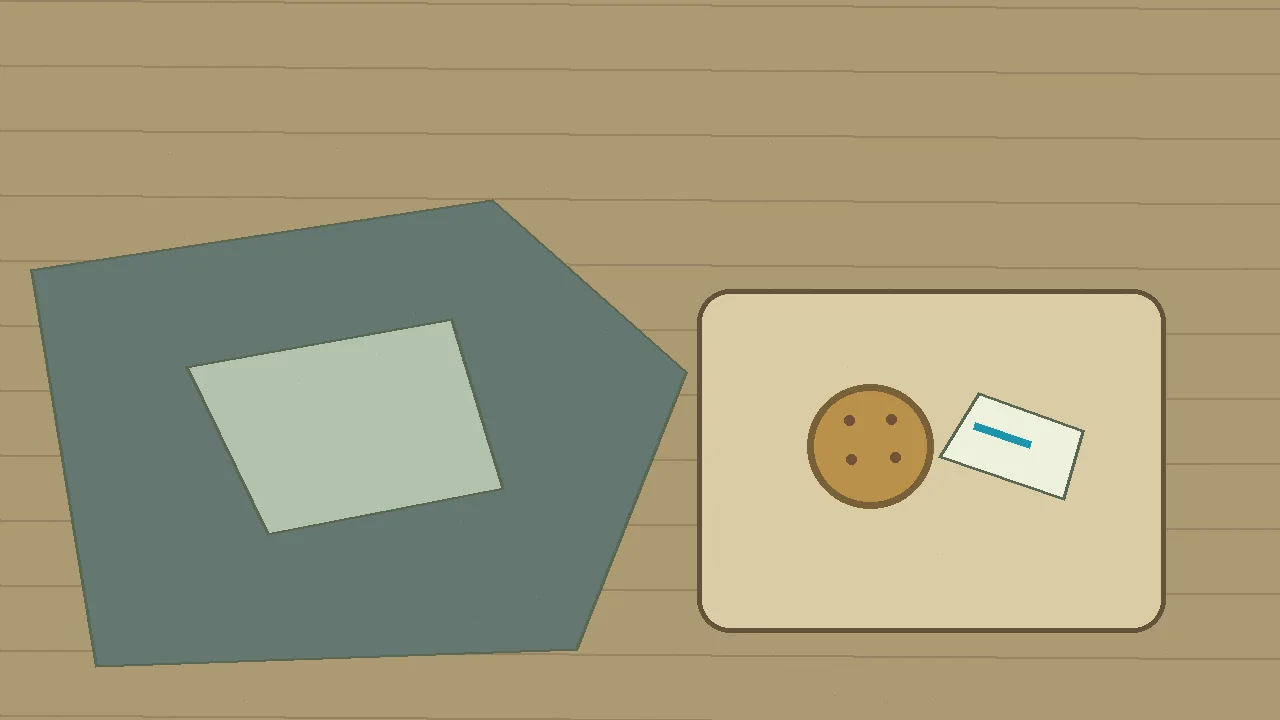
The button has a round outline, with a worn edge on one side. A close crop shows it against the pocket lining so it can be identified in the first view. In the larger sorting picture the same object can look like a drawing of a pin. We placed the button on a rectangular corner of the tray and gave that place a caption. The return mark stays visible close to the button. It has a distinct notched edge.
A first sketch made the tag appear beside the coat every time the button moved. That did not help the player find the small object at the return table. The later version includes a matching tag next to the tray position. You can see how the two marks relate while the coat is still open. In the next drawing, one stays with the coat and one stays with the tray.
Ask which part of the record is missing
The player may know the object came out of a coat while still being unsure which of two available tags is the match. We make that uncertainty visible by leaving the return field open until they choose. The game offers a hold rather than filling the field automatically. On the next turn the keeper can open both garment records and confirm which one has the matching notch. The tray drawing keeps the same position while the coat drawings change.
This lets us test the view when a player is unsure about an early choice. If the screen displays only the final tag, someone may have to remember which coat was on the table. A wider reading can show the original coat shape and the tray beside it. The marker still deserves its own label so a reader can tell what part of the record has been confirmed.
Give the small thing a place at the point of return
The object can be explained one more time when it comes back to the return table. We use a close inset for the button and keep the folded garment next to it in a wider view. A caption says that the pieces match because of the return mark, with the original pocket record available through the case. If the two tags no longer look alike, the revision should retain more of their outline at the earlier steps.
In A Line Before the Rain, a garment can travel from one rail to another. Its tag moves with it. For the button, the garment and object travel separately and their tags need to preserve that relationship. The basket shelves lead into both cases. A useful test is to describe the object, tray and mark before looking at the final drawing. If you can point to the same three things at the return table, the design has retained what it needed from the sorting scene without asking you to remember where the coat happened to be hanging.