A Line Before the Rain
Check the route
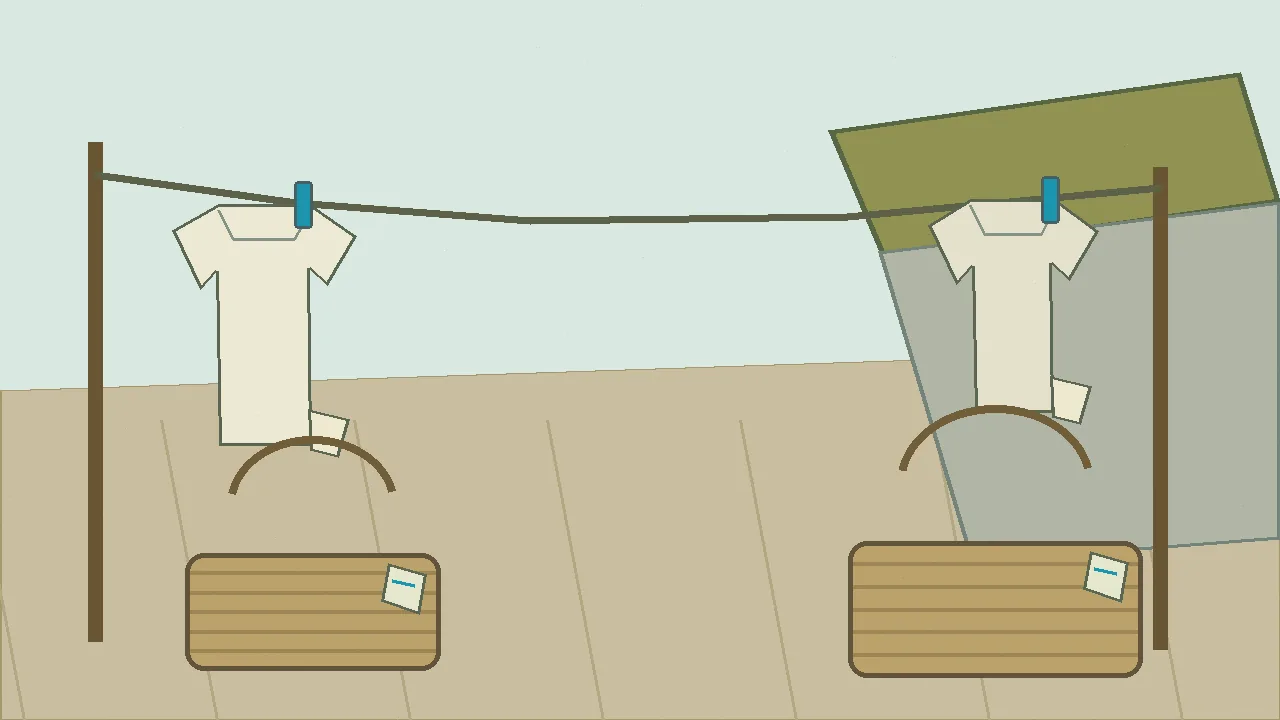
A line crosses the yard between two low posts. A second rail sits a little higher under an awning. When a cloud passes across the drawing, the keeper can see which portions of the line are still dry and where a newly washed shirt can be moved. A customer will arrive for a folded bundle after the yard has been rearranged. A Line Before the Rain gives the player a small drying yard, a few positions on the two rails and a return mark for each garment.
Mark the exposed side
Start at the line from the table end. The game identifies the exposed positions by their relation to the edge of the awning. Read the label on a garment, choose which pieces can stay and move one of the wet items to the covered rail. A clear outline explains what places are available. A written status beside the pin includes the return mark so the player can follow it after the change.
There is room for only a few pieces under the roof. A shirt with an earlier return can go on the closest pin. A darker garment can wait on the far part of the rail until the return table has room. You can try a different order and read which bundle is ready before carrying it back. The clothespins stay visible even when a wide garment hangs next to a narrow one.
Keep a record through the move
Check the folded items from the return table. A bundle can look nearly identical to another once the keeper has removed it from the line. A short visible tag can give each bundle a reason to sit in a particular place. In a replay, the first line drawing stays available next to the after view. The position of the pin can change while the name and shape of the tag are retained.
One scenario starts with an exposed shirt close to the table. The easiest move is to pass it to a covered place on the same side. A second piece occupies that place in another run. The player can keep the original priority or change which bundle is ready first. Both moves should preserve the link to the return record. If the new arrangement is harder to read, the comparison should show which position caused that problem.
Use the weather to make the route visible
The roof casts a broad blue-gray patch over part of the yard. It is distinct from the lighter marks on the rails. We use simple clips and soft woven shapes to give each item an outline. All rail positions have names in the static version of the view. A short before and after caption describes the move when the old location becomes empty. The illustration should make the location clear even when a player has asked for reduced motion.
This case is a prototype in development about a fictional laundry keeper. The small scope makes it possible to test whether a return tag can retain its meaning through a change in the yard. In The Button in the Pocket, the same question starts with a small object instead of a load. Open the basket shelves to see the two routes together.