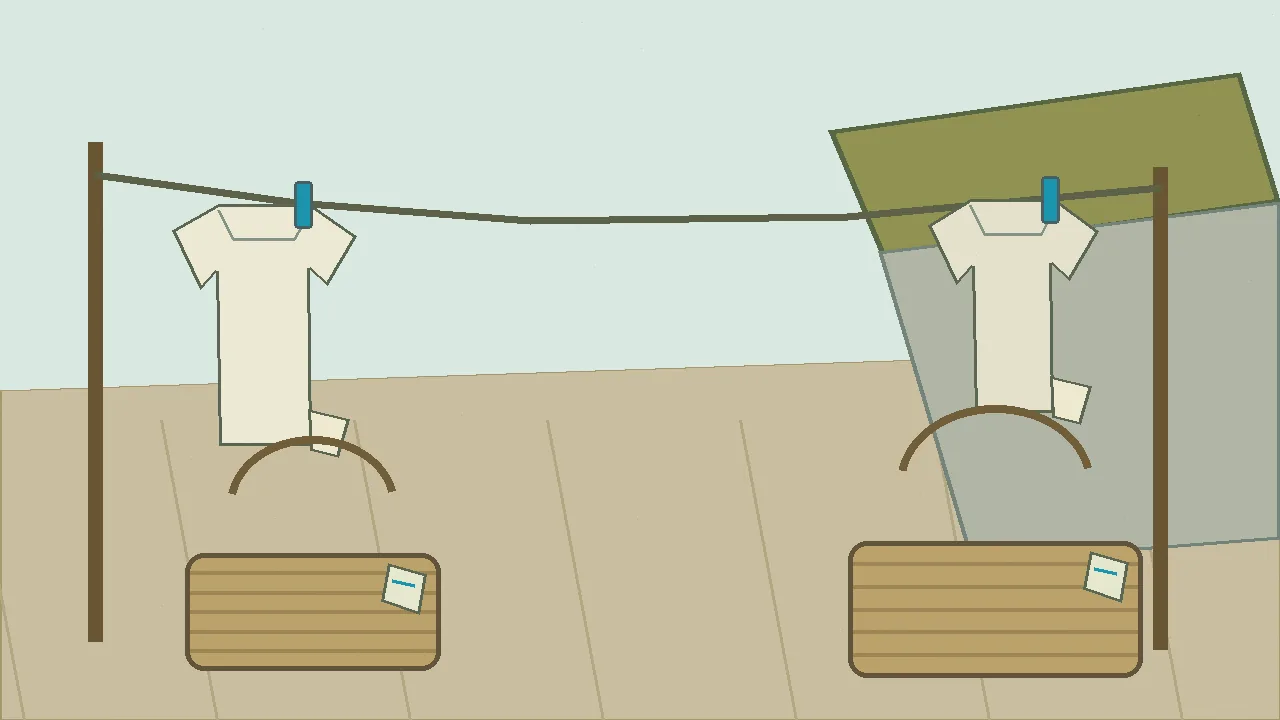
The exposed line is almost empty. There is a shirt near the table and another piece close to the yard wall. The first covered pin looks available from part of the yard. Near the rack you can see a folded garment already taking up room under it. Moving the last shirt into that space could make two tags difficult to read. The drawing needs to tell the player where there is room without moving the wall, rail or awning in the process.
The change occurs in A Line Before the Rain. We can hold one weather state and try two placements. The view before either move keeps the area under the roof clear enough for the player to inspect. The later drawing shows which labels are still visible and which garment is easy to bring to the return table.
Let the outline tell the player what is free
An early layout showed the available covered position with a bright patch on the rack. It became hard to tell whether that patch was a piece of light from the roof or a marker explaining an opportunity in play. We moved the available label to the edge of a small outlined slot. The soft angled shadow stays behind it. Now the person looking at the rails can separate the physical place from the changing weather.
A small screen can show the relevant part of the rack without dropping the edge of the roof. The tag sits below the garment in a static caption. A reader can compare whether the shirt can fit at the marked position before choosing between the two moves. When the space is occupied, its label states what is there instead of changing only its fill.
Follow the far end of the covered line
One version of the playtest moves the shirt to the far covered pin and leaves the earlier pin in use. Two tags remain visible, but a folded sleeve can brush against one mark in the wide picture. A closer shot shows the shape of each tag. Moving the shirt one pin closer to the wall makes more room for the two captions. This is a place where the case can test a second arrangement without making the player repeat the whole morning.
After settling the shirt in its new place, look at the order of the return labels. The next visitor is expecting a particular bundle. A useful after view leaves their return mark inside the new arrangement rather than making the garment appear to belong to whichever tag is on the nearest post. A pause between the move and the handover gives the keeper time to check the result.
Connect the rain move to the sorting case
The Button in the Pocket has a similar change in position before returning the shirt’s heavier neighbor, the coat. The forgotten item waits on a separate tray and the empty pin has room to record where the coat used to be. The tag gives the two views a way to agree about one item. A close and wide view can describe an item without making the labels crowd each other.
The basket shelves offer both routes. Read the closing arrangement in the rain case, then look for the original record from the pocket case. The easiest test is to name which place changed and which mark stayed with the garment. If you cannot find the mark without opening another picture, the next revision should give the narrow caption a clearer point of attachment. It may need a little extra room beside the clothespin rather than a brighter colour. The goal is to let the player see what can be returned from one clear view after the move.